

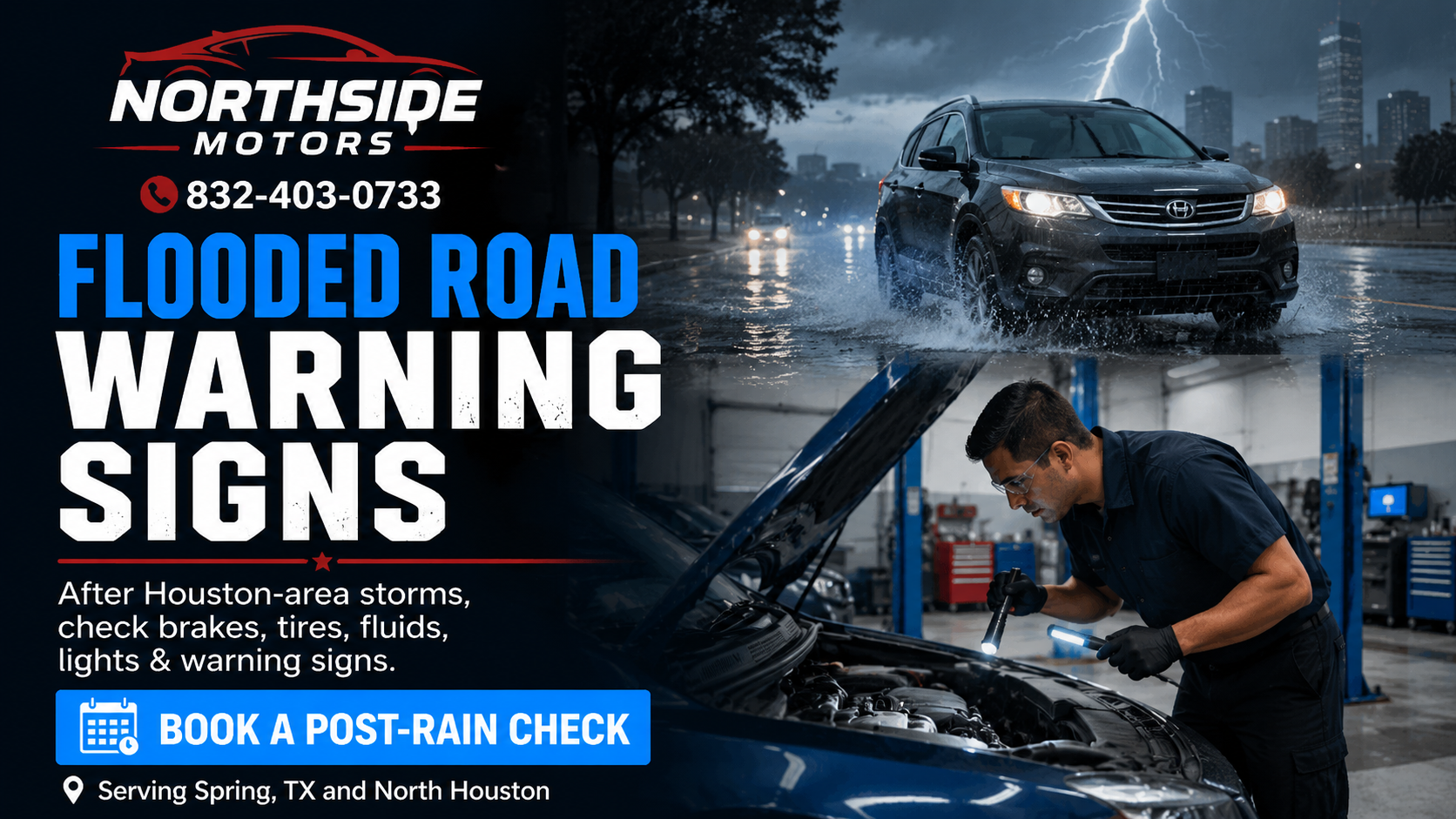
Houston-area storms can move in fast, and heavy rain can leave standing water on roads, parking lots, neighborhood streets, and intersections. Even if the water does not look deep, driving through it can create hidden vehicle problems that may show up later.
After driving through flood water or heavy rain, your car may sound different, feel different, smell different, or show warning lights. These symptoms should not be ignored. Water can affect brakes, electrical parts, fluids, tires, belts, sensors, and other important systems.
At Northside Motors, we help drivers in Spring, TX and North Houston check their vehicles after storms, heavy rain, and flooded-road situations. If your car feels off after driving through standing water, schedule an auto maintenance service before a small issue becomes a bigger repair.
Why Driving Through Standing Water Is Risky
It is easy to underestimate standing water. A puddle may look shallow, but you may not know what is underneath it. Flooded roads can hide potholes, debris, uneven pavement, stalled vehicles, or deeper water than expected.
Water can also splash into areas of the vehicle that are not designed to stay wet. Depending on how deep the water is and how fast you drive through it, moisture can affect your brakes, engine bay, electrical connections, wheel bearings, exhaust, undercarriage, and interior.
Even if your vehicle keeps running afterward, that does not always mean everything is fine. Some problems show up later, after water has had time to sit, corrode, or interfere with moving parts.
Warning Sign 1: Your Brakes Feel Different
Wet brakes are one of the most common concerns after driving through heavy rain or standing water. If water gets on the brake components, your brakes may temporarily feel less responsive. In some cases, they may squeal, grind, pull, or feel soft.
Pay attention to:
Squealing after driving through water
Grinding noises
A soft or spongy brake pedal
Vibration when braking
Pulling to one side
Longer stopping distance
Brake warning lights
If your brakes do not feel normal after they dry out, schedule service quickly. Northside Motors can inspect brake-related concerns and help determine whether the issue needs attention. You can also learn more about related service through our brake flush service.
Warning Sign 2: The Car Pulls to One Side
If your vehicle starts pulling left or right after driving through standing water, there may be an issue with tires, brakes, alignment, suspension, or uneven traction. Flooded roads can hide potholes and debris that may damage tires or affect how the vehicle handles.
A pull may also happen if brake components are affected by water or if one tire loses pressure after impact with debris.
Do not ignore pulling, especially if it starts suddenly after a storm. It can make the vehicle harder to control and may point to a safety concern.
Warning Sign 3: You Hear New Noises
New sounds after heavy rain should get your attention. Water, debris, and road grit can affect moving parts, brakes, belts, pulleys, shields, or undercarriage components.
Listen for:
Squealing
Grinding
Scraping
Rattling
Clicking
Whining
Thumping
A new sound does not always mean a major repair, but it does mean the vehicle should be checked. Catching the cause early can help prevent more damage.
Warning Sign 4: Dashboard Warning Lights Turn On
Water and electronics do not mix well. After driving through deep water or heavy rain, dashboard lights may appear if sensors, wiring, connectors, or engine components are affected.
Do not ignore warning lights such as:
Check engine light
Battery light
Brake warning light
ABS light
Traction control light
Oil pressure warning
Temperature warning
If a warning light appears after heavy rain, Northside Motors can help diagnose the issue through our engine light service. A diagnostic check can help identify whether the light is related to water exposure, sensor issues, electrical concerns, or another problem.
Warning Sign 5: The Car Smells Musty or Damp
A musty smell after driving through rain or flood water can be a sign that moisture has entered the cabin, carpets, vents, or trunk area. Moisture inside the vehicle can lead to odor, mold, electrical issues, or interior damage if ignored.
Check for:
Damp carpets
Wet floor mats
Moisture in the trunk
Foggy windows
Musty AC smell
Water stains
Unusual odors from vents
If your vehicle smells damp after a storm, it is better to inspect it early before the issue gets worse.
Warning Sign 6: Fluids Look Milky, Dirty, or Low
Water can contaminate vehicle fluids in some situations, especially after deep water exposure. Contaminated fluids may lose their ability to protect the systems they are designed for.
After flood water exposure, fluids that may need attention include:
Engine oil
Transmission fluid
Brake fluid
Power steering fluid
Coolant
Differential fluid
If fluid looks milky, foamy, unusually dark, or low, schedule an inspection. Staying current with oil change service and routine maintenance can help protect your vehicle after severe weather.
Warning Sign 7: The Engine Runs Rough or Stalls
If your engine runs rough, hesitates, stalls, or struggles to start after driving through water, do not ignore it. Water may have affected sensors, electrical parts, air intake components, ignition parts, or other systems.
In more serious cases, water entering the engine can cause major damage. If the vehicle stalls in water, it is usually best not to keep trying to restart it. Have it checked before making the problem worse.
Warning Sign 8: Tires Lose Pressure or Feel Unstable
Flooded roads can hide sharp debris, potholes, or road damage. After driving through standing water, your tires may develop slow leaks, sidewall damage, tread damage, or uneven wear.
Check your tires if you notice:
Low tire pressure
Vibration
Pulling
Bulges or cuts
Uneven tread
A rougher ride
A tire warning light
Tires are your contact with the road, so it is important to make sure they are safe after storm driving.
Warning Sign 9: The AC or Vents Smell Strange
Moisture can affect the cabin air system, especially if water enters areas near the cabin filter, vents, carpet, or interior. If your AC smells musty after a storm, it may be more than an odor problem.
A strange smell can point to trapped moisture, dirty filters, or damp interior areas. If the AC airflow also feels weak or unusual, your vehicle may need additional inspection.
Northside Motors can help with car AC repair if your AC performance or cabin airflow changes after heavy rain.
What to Do After Driving Through Flood Water
If you drove through standing water, take the situation seriously even if the car seems fine at first.
Here is what to do:
Do not ignore new sounds, smells, or warning lights.
Test brakes carefully in a safe area.
Check tire pressure and visible tire condition.
Look for leaks under the vehicle.
Check for damp carpets or musty smells.
Watch the temperature gauge.
Schedule an inspection if anything feels unusual.
If the water was deep, the vehicle stalled, or warning lights appeared, avoid driving more than necessary until the car is inspected.
Hurricane Season Vehicle Prep
Storm preparation is not just about your house. Your vehicle should also be ready before heavy rain or hurricane-season weather.
Before the next storm, check:
Tires
Wipers
Battery
Lights
Fluids
Brakes
AC and defrost
Emergency kit
Fuel level
Phone charger
Important documents
A maintenance check before storm season can help reduce the risk of being stranded or dealing with preventable problems during bad weather.
Why Choose Northside Motors After Heavy Rain?
Northside Motors is a local auto repair shop in Spring, TX helping drivers with maintenance, inspections, diagnostics, and repair services. After heavy rain or flooded-road driving, our team can help check the systems most likely to be affected.
We can help with brakes, fluids, warning lights, AC concerns, oil service, maintenance checks, and other vehicle issues that may appear after storms.
You can also visit our full auto repair services page to see more ways we can help keep your vehicle reliable.
Schedule a Post-Rain Vehicle Check
If your vehicle feels, smells, or sounds different after driving through standing water, do not wait for the problem to get worse. Water-related vehicle issues can be hidden at first, but early inspection can help prevent bigger repairs.
Call Northside Motors today at (832) 403-0733 or visit our Contact Us page to schedule a post-rain vehicle check.
Northside Motors
2219 Louetta Rd
Spring, Texas 77388
Frequently Asked Questions About Flooded Road Vehicle Problems
What should I check after driving through flood water?
After driving through flood water, check your brakes, tires, lights, fluids, dashboard warning lights, engine performance, and interior for dampness or musty smells. If anything feels different, schedule an inspection.
Why do my brakes feel different after heavy rain?
Water can temporarily affect brake components. If your brakes squeal, grind, pull, vibrate, or feel soft after driving through water, they should be checked.
Can driving through water damage my engine?
Yes. If water reaches the intake or sensitive engine components, it can cause serious damage. If your vehicle stalls in water, avoid repeated restart attempts and have it inspected.
Why does my car smell musty after a storm?
A musty smell may mean moisture has entered the carpets, vents, cabin filter area, or interior. It should be checked before it causes odor, mold, or electrical concerns.
Should I get an oil change after driving through flood water?
If the vehicle drove through deep water or you suspect contamination, have the fluids checked. If oil looks milky or unusual, service may be needed.
Where can I get my car checked after heavy rain in Spring, TX?
You can visit Northside Motors for a post-rain vehicle check. Our team can inspect brakes, fluids, warning lights, tires, AC concerns, and other storm-related issues.
Sign up to our Newsletter
(We do not share your data with anybody, and only use it for its intended purpose)
