

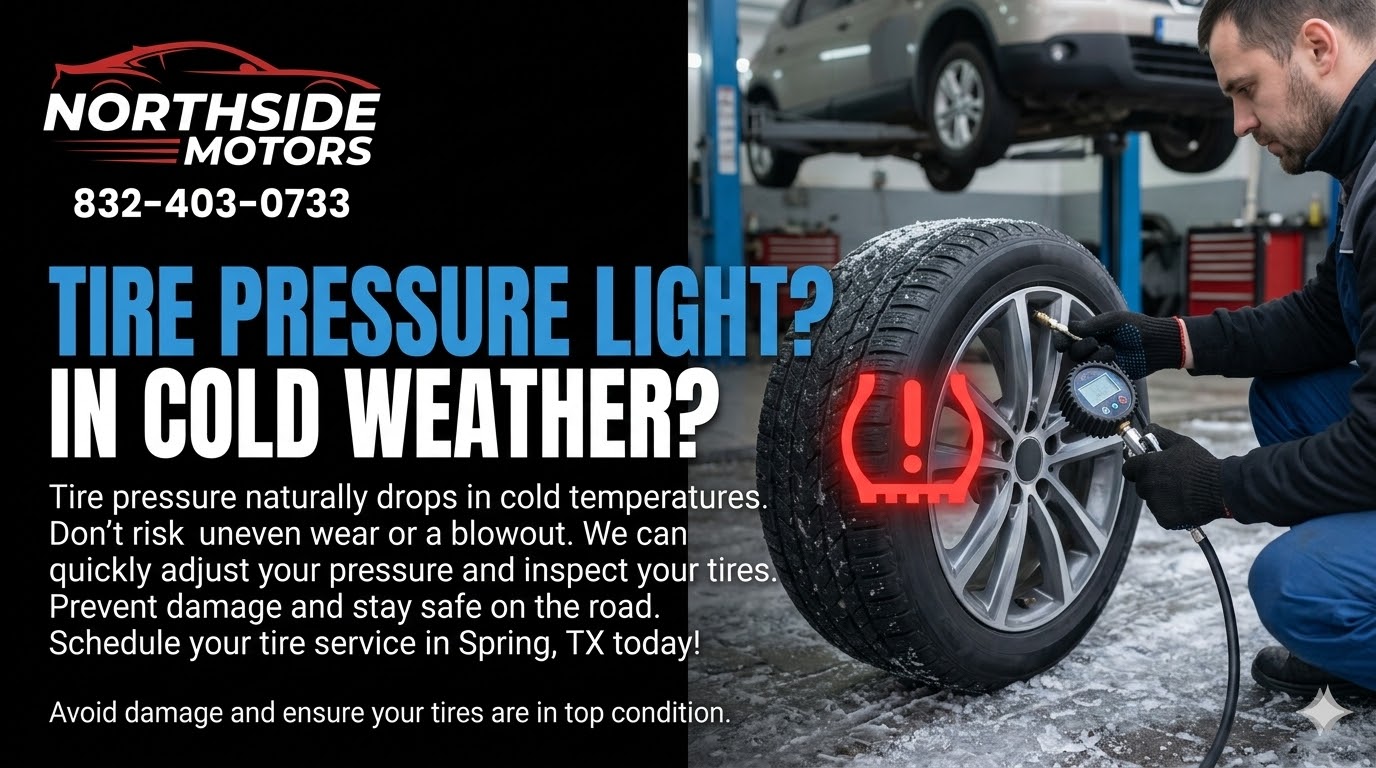
If your tire pressure light keeps coming on when the weather changes, you’re not imagining it. This is one of the most common winter and cold snap issues drivers deal with, even in places where winter is mild.
The good news is that it’s often something simple. The other news is that sometimes it’s a warning you should not ignore, especially if one tire keeps losing air faster than the others.
This guide explains why tire pressure drops in cold weather, how to check it the right way, and when that TPMS light is pointing to a real leak or tire damage.
Why Tire Pressure Drops When It Gets Cold
Tires lose pressure as temperatures drop because air contracts in cooler conditions. A common rule of thumb is that tire pressure can drop about 1 PSI for every 10 degree drop in temperature. That means a colder morning after a warm day can be enough to trigger the tire pressure light.
This is why you might drive home with no warning lights, then start the car the next morning and see the TPMS light on right away.
If the light turns off after you drive for a bit, it’s often because the tires warmed up and the pressure rose slightly.
What The Tire Pressure Light Is Really Telling You
The tire pressure monitoring system is designed to alert you when pressure drops below a safe threshold. It’s not judging your tires, it’s trying to prevent problems like:
reduced traction in wet weather
longer stopping distances
faster tire wear
higher chance of a blowout
worse fuel economy
Driving on low tire pressure can also damage the tire itself, especially if the sidewall flexes too much. Once sidewalls are damaged, the tire may not be safe to repair.
First Step Check Tire Pressure The Right Way
The fastest way to stop guessing is to check the actual pressure.
Check When Tires Are Cold
Check tire pressure before you drive, not after. Driving heats tires up, which raises pressure and can give you an inaccurate reading.
Use The Door Sticker Not The Tire Sidewall
The recommended PSI is usually listed on the driver side door jamb sticker. That’s the number to follow, not the maximum PSI on the tire.
Compare All Four Tires
If all four are low by a similar amount, it’s likely temperature related or time since last top up. If one tire is much lower than the others, that’s a strong sign of a leak.
If you’re seeing uneven pressure or the light keeps returning, scheduling a vehicle inspection can help identify the cause before it turns into a flat. You can book a vehicle inspection with Northside Motors and get a clear answer.
Common Reasons The TPMS Light Keeps Coming Back
Seasonal Temperature Swings
This is the most common cause. Tires that were filled on a warm day can show low pressure on a colder morning.
Slow Leaks From Nails Or Screws
A slow leak often shows up as one tire losing air every few days. You might not see a visible puncture, but the TPMS light keeps returning.
If you find yourself topping up the same tire repeatedly, do not ignore it. That tire needs a proper inspection.
Leaky Valve Stems
Valve stems can crack over time, and valve cores can loosen. This can create a slow leak that looks like a puncture but isn’t.
Wheel Damage Or Bead Leaks
If a wheel is bent or the tire bead is not sealing properly, air can leak slowly around the rim. This is more common after hitting potholes or curbs.
Tire Age And Sidewall Cracking
Older tires can lose air more easily, and sidewall cracking is a safety issue. Even if tread is still decent, age and cracking can make a tire unreliable.
If your tires are worn, cracking, or repeatedly losing air, it may be time for tire replacement rather than constant top ups.
Is It Safe To Drive With The Tire Pressure Light On
Sometimes you can drive carefully to a nearby air station or shop, but it depends on how low the pressure is.
If a tire looks visibly low, the car feels unstable, or you hear flapping or thumping, stop and check the tire. Driving on a very low tire can destroy it quickly.
If you can safely check pressure and refill it to the correct PSI, that’s fine. If the light returns soon after, there’s likely a leak or sensor issue.
How To Reset The Tire Pressure Light
Many vehicles reset automatically after you inflate the tires and drive for a short period. Others require a manual reset through the dashboard menu.
A common mistake is topping up only one tire, then wondering why the light stays on. All tires should be set to the correct PSI, then the system can recalibrate.
If your light stays on even after proper inflation, it may need a sensor check.
When It Might Be A TPMS Sensor Issue
TPMS sensors have batteries that can fail over time. If a sensor is failing, you might see:
the light flashing before staying solid
a warning message about TPMS system fault
inconsistent readings
the light coming on even when tire pressure is correct
A sensor issue is less common than low pressure, but it does happen, especially on older vehicles.
A Simple Habit That Prevents Most TPMS Problems
Check tire pressure once a month and anytime the weather changes significantly. It takes five minutes and helps you avoid uneven wear and surprise warning lights.
It also helps your tires last longer, improves fuel economy, and keeps your vehicle handling the way it should.
When To Book A Tire Inspection
Book an inspection if:
one tire keeps losing air
you see cracks in the sidewall
the light returns within a day or two of refilling
you hit a pothole and the light came on afterward
the vehicle pulls or feels unstable
Northside Motors can inspect the tires, check for leaks, and help you decide whether you need a repair or tire replacement.
If you want to schedule it, use contact us and let us know the TPMS light symptoms and whether it’s one tire or all four.
Sign up to our Newsletter
(We do not share your data with anybody, and only use it for its intended purpose)
